

A commercial and cultural crossroads
The town of Ambanja is the commercial and cultural crossroads of a strongly agricultural region with more than 200,000 inhabitants. Its own population is estimated at just over 30,000.
This is where Compagnie du Miel harvests mangrove honey.
Indeed, it is a privileged region of Madagascar, as the tropical climate makes it possible to secure the essentials: rice, coffee, cocoa and vanilla crops, as well as zebu breeding, even though this income unfortunately does not always benefit the local population.

A protected area
Anjozorobe is an urban municipality in the Analamanga region, in the province of Antananarivo.
Compagnie du Miel harvests Eucalyptus honey there.
The town lies about 90 kilometres from Madagascar’s capital and is located on the right bank of the Mananara River, a tributary of the Betsiboka, the largest navigable river in Madagascar.
Surrounded by hills, rice fields and forests, Anjepy is known for its forest corridor, which is extremely rich in animal and plant species.
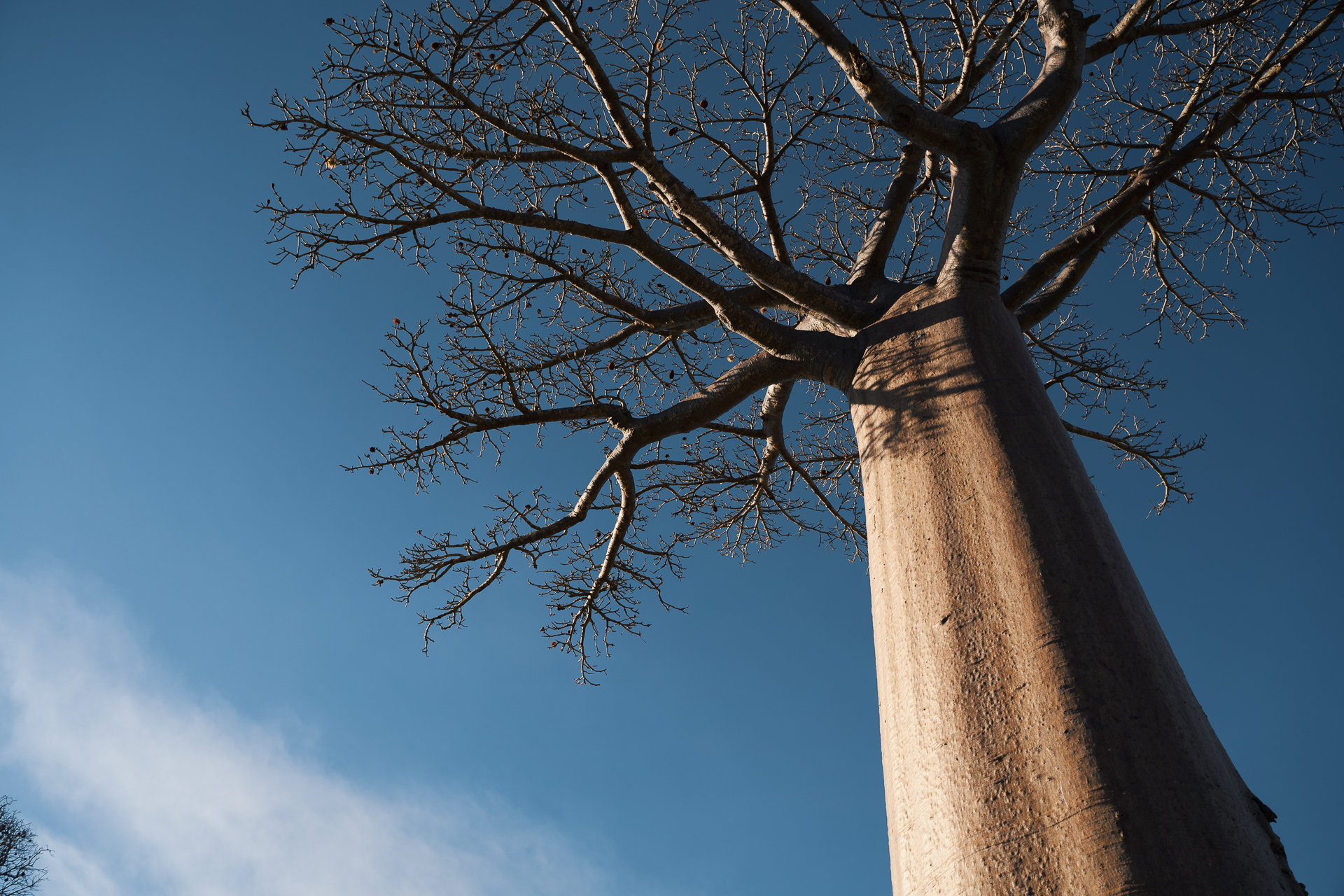
Menabe, a flagship region of western Madagascar
Near Morondava, the iconic Avenue of the Baobabs offers a truly unique scene: a road lined with majestic centuries-old baobabs, symbols of the region and living witnesses of the western forest ecosystems.
Near Morondava, the iconic Avenue of the Baobabs offers a truly unique scene: a road lined with majestic centuries-old baobabs, symbols of the region and living witnesses of the western forest ecosystems.
Between red earth, golden light and baobab silhouettes at sunset, Menabe embodies a face of Madagascar that is both emblematic and essential to our beekeeping story.

Remarkable biodiversity
Manakara is a town on the south-east coast of Madagascar, the capital of the Fitovinany region in the province of Fianarantsoa and the administrative centre of the district of the same name. Manakara is a former colonial town with a small port.
It is in Manakara that Compagnie du Miel harvests Lychee, Niaouli and Mokarana honey.
The town is located near the mouth of the Manakara River from which it takes its name and has a small port. The urban municipality of Manakara covers 31.756 km², about half of which is urbanised.

The French Riviera of Madagascar
Also known as “Fort Dauphin”, Tôlanaro is a town that has managed to preserve many traces of its past. Long occupied by Europeans in the 17th century, Fort Dauphin served as a trading post and was named in honour of King Louis XIV.
It is also from here that the very first settlers left for Réunion Island. Nestled on a headland at the foot of Saint Louis peak, Fort Dauphin offers magnificent scenery, among the most spectacular in Madagascar.